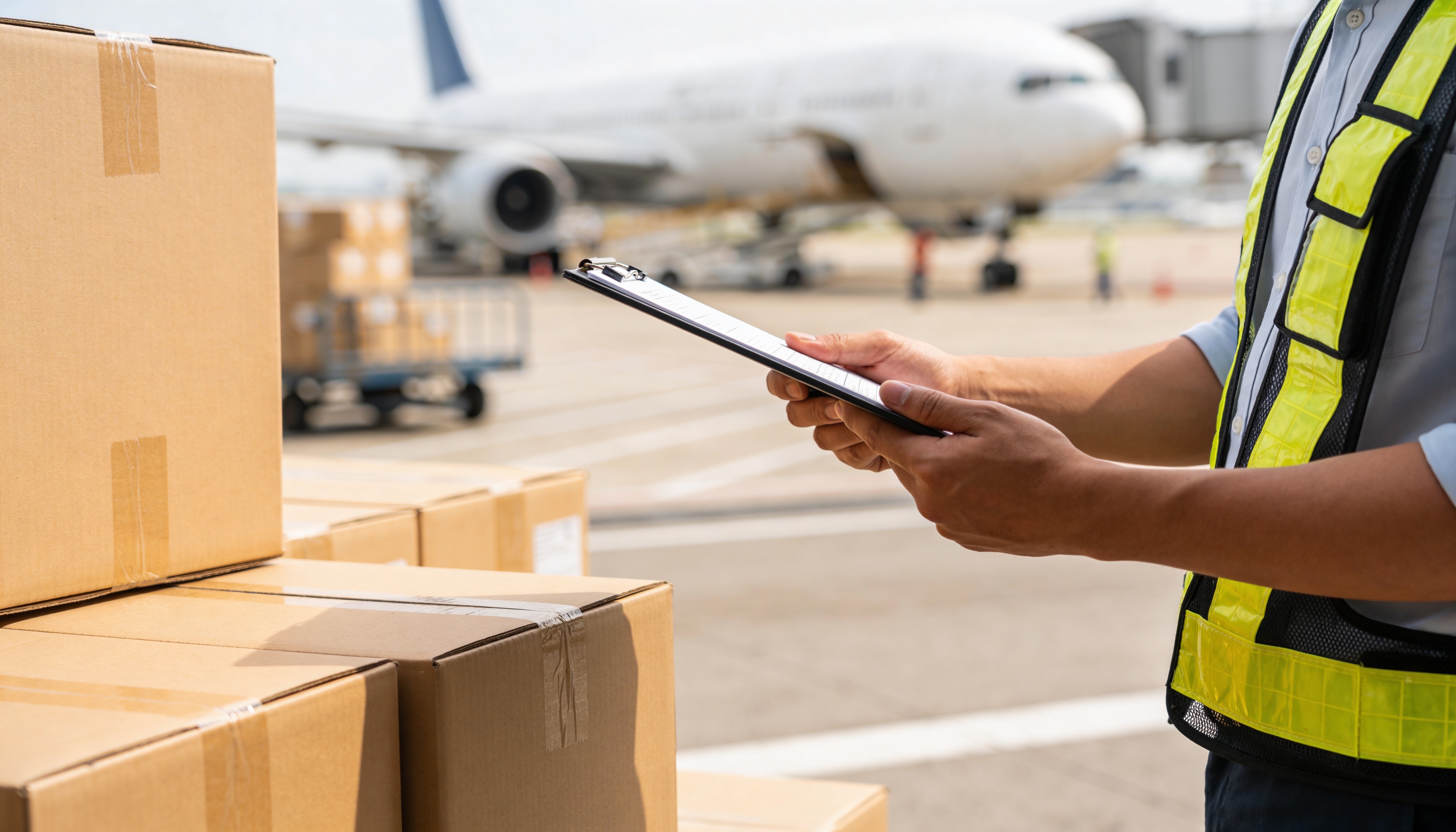
In air cargo, the customer experience is decided in the operations center. A shipper rarely remembers the flight that left on time. They remember the one that didn't, and how late they found out about it.
That is why customer service in air cargo starts long before anyone picks up the phone. It starts in the network operations center (NOC), where teams try to spot trouble across hundreds of shipments, flights, and stations at once. Too often, they find it only after a connection is missed and a customer is already asking questions.
On October 26, 2026, SmartKargo launched the first release of its AI Apps portfolio. One of its four apps, AINOC, is built to change that moment. It turns the NOC from a place that reacts to delays into one that sees them coming, so airlines can protect service commitments and tell customers what is happening before they have to ask.
Four AI Apps, One Test: Revenue, Cost, or Risk
Every AI app SmartKargo ships has to pass one test. It must drive revenue, reduce cost, or reduce risk for the airline, and do so responsibly and securely.
The first release includes four API-delivered apps, each aimed at a domain that moves the cargo P&L:
| App |
What it does |
| AIRCAM (AI Revenue & Capacity Management) |
Forecasts capacity and demand, and recommends dynamic spot rates in real time for better yield per flight and route |
| AINOC (AI-Powered Cargo Control Tower) |
Gives operations one predictive view of the network and finds exceptions before they become delays |
| AIULD (AI ULD & Asset Management) |
Tracks and forecasts ULD location, condition, and availability to cut asset losses and delays |
| AICTX (Universal Messaging & Interoperability Backbone) |
Connects systems and partners through one standards-based messaging layer so clean data flows downstream |
All four run on top of the airline's existing cargo management system, commercial or in-house. They are modular and go live in weeks, not years. As SmartKargo Chief Revenue Officer Olivier Houri put it at launch, "we start with something far more useful than hype: a business question."
Meet AINOC: The AI-Powered Cargo Control Tower
Airlines already have the data. Cargo platforms, flight operations, airport systems, and partners produce a constant stream of operational signals. What has been missing is a way to read all of it at once and act on it early.
AINOC reads those signals, predicts where disruption is heading, and gives ops, track and trace, commercial, IT, and leadership the same real-time picture of risk. It does this with six models:
-
Predictive Delay Engine forecasts a delay's timing, location, and duration before it cascades through the network, giving teams room to respond.
- Risk Detection flags early signals across weather, airspace, handling, and capacity, so no team depends on a single feed.
- Root Cause Analysis pinpoints the real cause of a disruption quickly, so teams fix the problem rather than its symptoms.
- Prioritization ranks every exception by business impact, so teams work the most important shipment first, not the loudest one.
- AI Summaries turn raw data into clear insights and recommended actions for ops and executive teams.
- Impact and SLA Analysis assesses shipment, customer, and SLA exposure for every event on the network, so teams know which commitments are at risk.
Why AINOC Is a Customer Service Story
Operational issues rarely stay isolated. One delay can ripple into missed connections, broken service commitments, and strained customer relationships. AINOC is built to stop that chain early, and that changes what customer service can promise.
SLA Risk Is Visible Before the SLA Is Missed
AINOC weighs each shipment against the customer commitments behind it. Teams see which bookings are at risk while there is still time to rebook, reroute, or reprioritize.
The Most Valuable Customers Are Not Lost in the Noise
Because exceptions are ranked by business impact, a time-critical pharma or e-commerce shipment rises to the top even when another issue is generating more alerts.
Customers Hear It from the Airline First
AINOC's outputs include a customer communication hub alongside shipment risk summaries and priority alerts. Service teams can reach out proactively with a clear status and next step, instead of reacting to an angry inbound call.
Every Team Tells the Same Story
Ops, track and trace, commercial, and leadership share one live picture. The answer a customer gets from sales matches what operations is actually doing.
Answers Are Faster and Clearer
AI summaries and root-cause insights explain what happened and what to do next in plain language. That shortens resolution time and makes customer updates easier to write.
How It Works: Live Data In, Proactive Decisions Out
AINOC adds an intelligence layer on top of the systems an airline already runs. The flow has three stages:
-
Live operating inputs: cargo platform milestones, air traffic and weather data, airport and flight operations, and partner and customer signals.
- The AINOC intelligence core: the predictive delay engine, risk detection, impact and SLA analysis, root-cause AI, and a GenAI briefing layer.
- Control tower outputs: a shipment risk summary, priority alerts, a live network tracker, and a customer communication hub.
There are no separate data pipelines to build, and no migration or parallel systems. AINOC reads the operational data teams already generate.
Start Small, Prove Value, Then Scale
AINOC is designed for fast deployment because it works with data the operation already produces. A typical pilot focuses on one hub and a couple of trade lanes during a defined live evaluation window. Once the results are validated, the airline can extend AINOC to more hubs, lanes, or the whole network.
Pricing follows operations rather than seats. Airlines can choose:
-
Per airport, for a focused footprint
- Per operations center, aligned to how the NOC is organized
- An annual enterprise subscription covering the whole network
And because every SmartKargo AI app connects through APIs, an airline that starts with AINOC can add AIRCAM, AIULD, or AICTX later on the same integration.
Act Before Delays Reach Your Customers
Great cargo customer service is not about answering complaints faster. It is about having fewer to answer, and getting ahead of the ones you can't avoid.
AINOC gives airlines that head start: disruption caught before SLAs are missed, faster issue resolution, and one shared real-time picture for every team that touches the customer. It plugs into the cargo system you already run and starts delivering value in weeks.
Ready to see it in action? Get an AINOC demo and explore how the full AI Apps portfolio can help your cargo business drive revenue, cut cost, and reduce risk.
FAQs
Q. What is AINOC?
A. AINOC is SmartKargo's AI-powered cargo control tower. It combines cargo milestones, flight and airport operations, customer commitments, and other signals into one real-time view of network performance. It predicts delays, flags SLA risks, and highlights the shipments that need attention first.
Q. How does AINOC improve customer service?
A. It shows which customer commitments are at risk before they are missed, so teams can recover the shipment or update the customer early. Its customer communication hub, priority alerts, and AI summaries help service teams give proactive, accurate answers.
Q. Do we have to replace or migrate our cargo management system?
A. No. AINOC works alongside existing systems, whether a commercial platform or an in-house build. It reads the data your teams already generate, with no migration and no separate data pipelines.
Q. How fast can we go live?
A. In weeks, not years. A typical pilot covers one hub and a couple of trade lanes during a defined live evaluation window. After it is validated, AINOC can expand to more hubs, lanes, or the full network.
Q. How is AINOC priced?
A. Pricing follows operational scope, not user seats. Options are per airport, per operations center, or an annual enterprise subscription for the whole network.
Q. What results can we expect?
A. Teams get a shared live view of shipment and SLA risk, catch disruption earlier, and resolve issues faster. Your SmartKargo account team can share benchmark ranges from similar networks to set pilot expectations.
Q. Can we use AINOC with SmartKargo's other AI apps?
A. Yes. AINOC is one of four modular apps, alongside AIRCAM, AIULD, and AICTX. Airlines can adopt one app or the full portfolio and add new capabilities on the same API integration as they become available.